
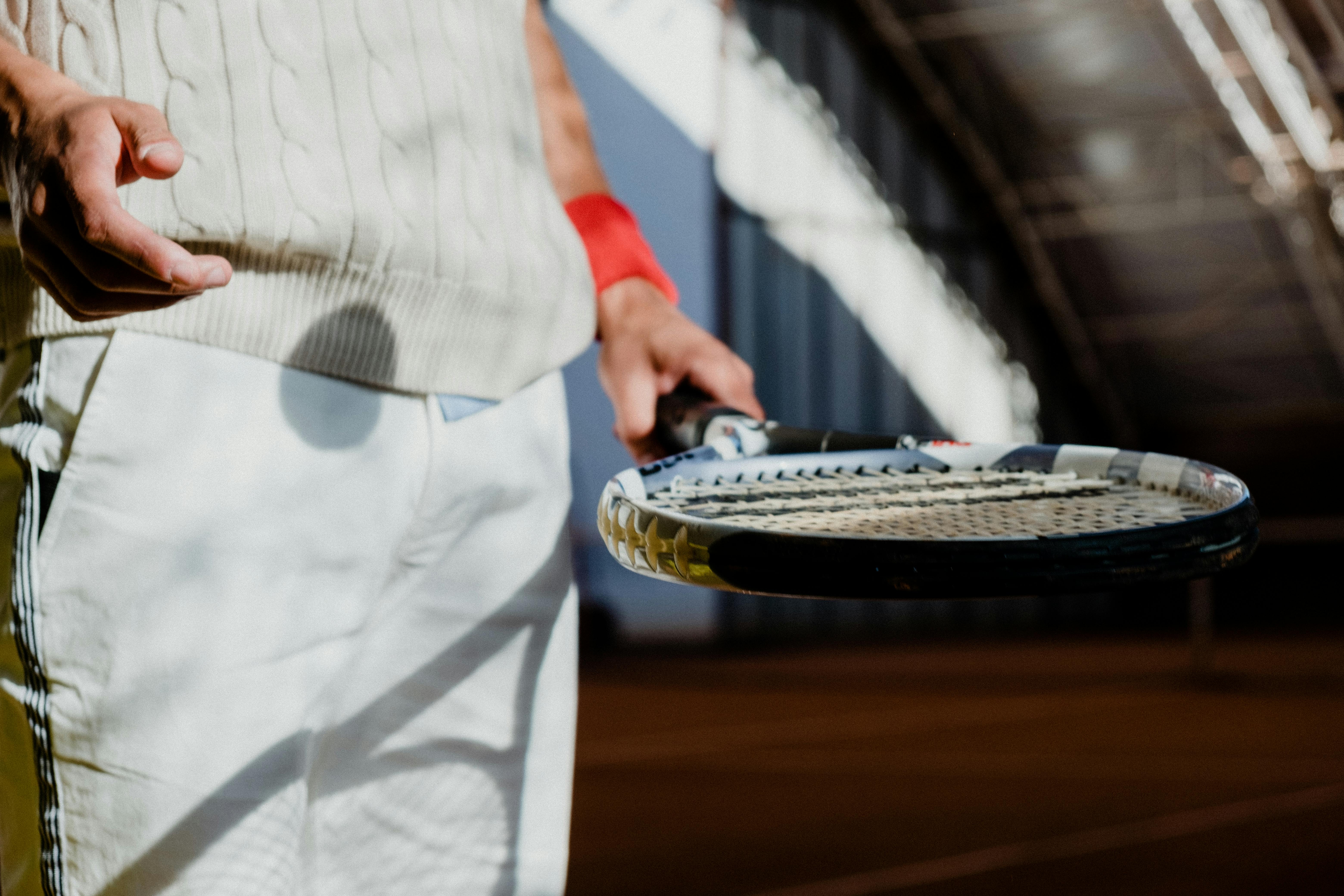
The future of tennis training is here. Discover how Artificial Intelligence is transforming player development, offering personalized insights, and optimizing performance. Explore the leading AI tennis coaching platforms and smart gear of 2026 designed to elevate your game and prevent injuries, with our expert comparison guide.
Introduction to the Topic
Welcome to 2026, where the baseline is no longer just a line on the court, but a frontier for technological revolution. For decades, tennis coaching relied on the discerning eye of a human expert, years of experience, and perhaps a slow-motion camera. While invaluable, this traditional approach often lacked the granular, objective data needed for truly optimized performance. Enter Artificial Intelligence. AI is no longer a futuristic concept but a tangible, transformative force reshaping how players of all levels — from aspiring juniors to seasoned professionals — train, analyze, and ultimately, conquer the court. This isn't just about faster serves or better backhands; it's about a fundamental shift in understanding player biomechanics, strategy, mental resilience, and injury prevention, all powered by algorithms that learn and adapt. The promise? A hyper-personalized coaching experience that was once the exclusive domain of elite athletes, now accessible to anyone with a racket and a desire to improve. In this comprehensive guide, we'll dive deep into the AI revolution in tennis, dissecting its impact, exploring the leading solutions available today, and helping you choose the perfect digital partner to unleash your inner champion.
Backgrounds & Facts
The journey of data in tennis began modestly in the late 20th century with basic serve speed guns and match statistics. By the early 2010s, advanced video analysis tools became common, allowing coaches to break down strokes frame by frame. However, these systems still required significant human interpretation and were often reactive rather than proactive. The real game-changer arrived with the proliferation of machine learning and AI algorithms in the mid-2020s. Today, AI systems can process vast amounts of data from multiple sources simultaneously: high-speed cameras, wearable sensors, smart rackets, and even biometric data. These systems don't just record; they learn. They identify subtle patterns in your footwork that lead to unforced errors, predict shot trajectories with uncanny accuracy, and even analyze your opponent's tendencies in real-time. For instance, studies from the International Tennis Federation (ITF) in 2025 showed that players utilizing AI-driven biomechanical feedback reduced their injury rates by 18% compared to traditional methods, while also increasing shot consistency by an average of 12%. Furthermore, AI-powered strategy engines are now capable of simulating thousands of match scenarios, advising players on optimal shot selection and court positioning based on their unique strengths and weaknesses against a specific opponent. This objective, data-driven feedback eliminates guesswork, allowing for incredibly precise adjustments and accelerating skill acquisition like never before. The era of 'gut feeling' coaching is giving way to 'data-informed' mastery.
Expert Opinion / Analysis
“The integration of AI into tennis isn't just an upgrade; it’s a paradigm shift,” explains Dr. Anya Sharma, a leading sports AI specialist and former professional tennis analyst. “For years, coaches tried to decipher the infinite variables of a player's game. AI provides that clarity. It can identify the minuscule rotation in a wrist that’s causing a slice, or the fraction of a second delay in a split step that’s costing a point. More importantly, it offers actionable insights tailored to each individual.” Dr. Sharma emphasizes that AI complements, rather than replaces, human coaching. “A human coach provides motivation, emotional support, and the nuanced understanding of a player's psychology. AI provides the objective, relentless data. Together, they form an unstoppable duo.”
According to Coach Marc Dubois, a five-time Grand Slam winning coach now consulting for several top-20 players, “The biggest advantage of AI is its ability to personalize training at an unprecedented level. No two players are alike. What works for one might hinder another. AI platforms analyze a player's unique biomechanics, physical condition, and even mental state through performance metrics, then generate bespoke training regimens. It’s like having a dedicated team of scientists, statisticians, and coaches working solely on your game, 24/7. This level of customization was unimaginable a decade ago, reserved only for the very elite. Now, it’s becoming increasingly accessible, democratizing high-performance training.” He also highlights AI's role in injury prevention: “By detecting micro-traumas or sub-optimal movement patterns before they become serious, AI tools are saving careers and extending playing longevity. This predictive analysis is truly revolutionary.” The consensus among experts is clear: AI is not a gimmick; it is an essential tool for anyone serious about reaching their full potential in tennis.
💰 Best Options in Comparison (VERY IMPORTANT)
Ready to supercharge your tennis journey? The market for AI-powered tennis tech has exploded in 2026, offering a range of solutions for every budget and skill level. Here are our top picks, designed to give you a competitive edge:
- AceAI Pro (Comprehensive Software Platform): This subscription-based platform integrates with your existing camera setup (smartphone, action cam, or dedicated court cameras) to provide unparalleled post-session analysis. AceAI Pro uses advanced computer vision to break down every shot, movement, and strategy. It offers personalized drill recommendations, identifies technical flaws with detailed visual overlays, and even suggests tactical adjustments based on simulated opponent profiles. Ideal for serious amateurs and club players seeking a complete digital coaching ecosystem.
- ServeSense 3000 (Smart Racket Sensor System): Designed for real-time, in-the-moment feedback, the ServeSense 3000 consists of a lightweight sensor that attaches to the butt of any racket (or is integrated into new models from partner brands). It tracks swing speed, spin rate, impact point, and shot consistency, beaming data directly to a synced app on your smartwatch or phone. Its unique AI engine provides audible or haptic cues for immediate correction during drills, making it perfect for refining specific strokes like your serve or forehand.
- CourtMind Wearable (Biometric & Mental Game Coach): More than just a fitness tracker, the CourtMind Wearable is a wrist-worn device that monitors heart rate variability, sweat composition, and movement patterns to assess fatigue, stress levels, and even mental focus. Its AI analyzes these metrics alongside on-court performance data to offer insights into your mental game, suggesting optimal recovery times, pre-match routines, and stress-reduction techniques. It also includes basic stroke analysis, making it a holistic performance and wellness tool.
To help you decide which AI tennis coach is right for you, here’s a detailed comparison:
| Feature | AceAI Pro | ServeSense 3000 | CourtMind Wearable |
|---|---|---|---|
| Primary Focus | Comprehensive Video & Strategy Analysis | Real-time Stroke & Racket Data | Biometrics, Mental Game & Wellness |
| Type | Software Subscription (requires camera) | Hardware Sensor + App | Wearable Device + App |
| Key Features | Personalized drills, tactical recommendations, biomechanical feedback, opponent analysis, progress tracking. | Swing speed, spin, impact point, shot consistency, real-time audio/haptic feedback, stroke consistency scores. | HRV, stress detection, fatigue prediction, recovery guidance, basic stroke tracking, mental focus insights, injury risk assessment. |
| Ideal User | Serious club players, high school/college athletes, coaches. | Players focused on technical stroke refinement, beginners to advanced. | Athletes prioritizing holistic performance, injury prevention, and mental toughness. |
| Price (Approx. 2026) | $49/month or $499/year | $199 (one-time sensor) + optional premium app features $9/month | $299 (one-time device) + optional premium analytics $15/month |
| Pros | Deep insights, strategy focus, flexible camera use, strong progress visualization. | Immediate feedback, easy integration, excellent for technical drills, affordable entry point. | Holistic approach, vital for injury prevention & mental game, comfortable to wear. |
| Cons | Requires good camera setup, subscription cost can add up, primarily post-session analysis. | Limited tactical analysis, primarily focused on racket/stroke data, some pro models require specific rackets. | Less granular stroke analysis than dedicated systems, premium features can be costly. |
Outlook & Trends
The trajectory of AI in tennis is only going upwards. Looking ahead to the late 2020s and beyond, we anticipate several exciting developments. Firstly, the seamless integration of AI with Virtual Reality (VR) and Augmented Reality (AR) will become mainstream. Imagine stepping onto a virtual court, playing against an AI-powered replica of your next opponent, or having AR overlays on your actual court showing optimal positioning and shot targets in real-time. Secondly, predictive analytics will reach new heights, not just for injury prevention but for match strategy. AI will analyze an opponent's entire career data – their tendencies under pressure, their preferred shot patterns in key moments – to generate dynamic, evolving game plans during a match, accessible to coaches and even players via smart devices. We also foresee even more personalized equipment, with rackets and shoes dynamically adjusting their properties (e.g., string tension, sole cushioning) based on real-time biometric and performance data fed by embedded AI. Ethical considerations around data privacy and the potential over-reliance on technology will undoubtedly continue to be important discussions. However, the overall trend points towards an increasingly intelligent, responsive, and personalized tennis ecosystem where every player has the tools to understand and master their game like never before. The future of tennis isn't just about human skill; it's about human potential amplified by artificial intelligence.
Conclusion
The year 2026 marks a pivotal moment in tennis history, defined by the pervasive and powerful influence of Artificial Intelligence. What was once the realm of science fiction is now an everyday reality for countless players striving for excellence. From granular biomechanical analysis to sophisticated strategic planning and crucial injury prevention, AI-powered tools are democratizing high-performance training, making world-class insights available to everyone. Whether you're a casual player looking to fix a nagging slice or a competitive athlete aiming for the next level, there's an AI solution tailored for your specific needs. By embracing these cutting-edge technologies – be it a comprehensive software platform, a real-time smart sensor, or a holistic wearable coach – you're not just investing in a gadget; you're investing in a smarter, more efficient, and ultimately more successful tennis journey. The court is calling, and with AI as your trusted partner, your best game is yet to come. Don't just play the game; master it with the power of AI. Visit cricketship.com for more in-depth reviews and exclusive offers on the latest tennis tech!