
Why Match Guides Feel Like the Real MVP
People think it’s all athleticism or lucky bounces. Bull. Good match guides are obsessive. Teams spend hours—days—digging into opponent film, charting every tendency. I tried doing my own mini version for fantasy football last season: stayed up till 3 a.m. charting matchups while eating leftover wings that were definitely questionable. Thought I had the perfect game plan. Monday morning? My team scored like 68 points. Got absolutely torched. Lesson learned: pros do this with actual data teams, not just vibes and hot sauce stains on my notebook.
They tailor everything to strengths too. Got a receiver who runs crisp routes? Scheme him open all day. Defense can’t stop the run? Pound it. It’s straightforward until the game starts and everything goes sideways.
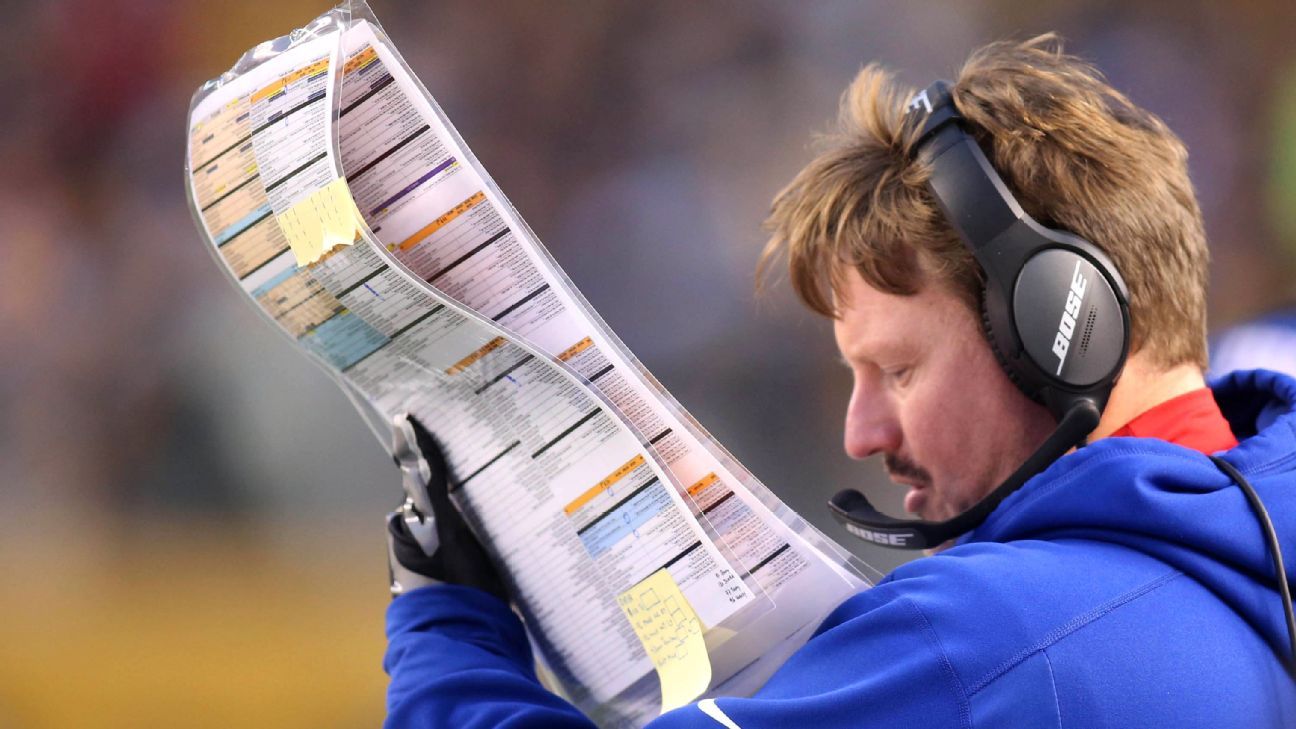
New York Giants coach Ben McAdoo’s playcard resembles diner menu – ESPN – New York Giants Blog- ESPN
See that? Coach with the giant play sheet that looks like a diner menu—classic. Those things are packed with every possible scenario. Winning strategies live on paper like that until they hit the field.
The Messy Step-by-Step of Building Match Guides
From what I’ve seen (and painfully tried to mimic), here’s how it usually shakes out:
- Film grind — Endless tape. Pros use HUDL or whatever fancy software now. They spot blitz tendencies, coverage weaknesses. I once spent a whole Sunday “scouting” my buddies for our pickup league. Felt pro until we lost because I forgot the other team had a guy who could actually shoot threes.
- Self-scout brutally — Admit your flaws. QB overthrowing? Limit deep balls. Guys gassed late? Rotate more. No sugarcoating.
- Whiteboard chaos — Draw, erase, redraw. Formations, audibles, red-zone packages. They laminate the good ones.
- Practice the what-ifs — Simulate blitzes, weather, injuries. Adapt or die.
- Communicate nonstop — Signals, calls, huddles. If the plan’s not crystal clear, it’s trash.

Robinson Honors Coach Combs With Tribe Classic Win
This huddle vibe—kids locked in, coach in the middle—it’s the heart of it. Even at lower levels, match guides matter.
Screw-Ups I’ve Witnessed (and One I Committed)
Remember when that one team had the perfect run-stop plan… then the QB scrambled for 80 yards? Classic. Or NBA: coach draws the iso play, guy bricks it anyway. Happens constantly.
But when it clicks? Beautiful. Like exploiting a coverage mismatch perfectly. I read breakdowns on PFF or The Athletic all the time—Pro Football Focus has insane data on how these plans turn into yards. Same with basketball stats on NBA.com. Real eye-openers.

Creating a Collaborative and Efficient Defensive Gameplan
That screen with tendencies and film overlaid? That’s modern match guides—data feeding straight into the plan.
Applying This Crap to Real Life (Badly)
I’m no coach, but I steal bits. Work deadline coming? “Scout” it—know the boss’s pet peeves, play to my strengths (procrastination with a burst finish, apparently), adjust when the Wi-Fi craps out. Still mess up constantly. Over-plan, panic-execute, classic.
\