
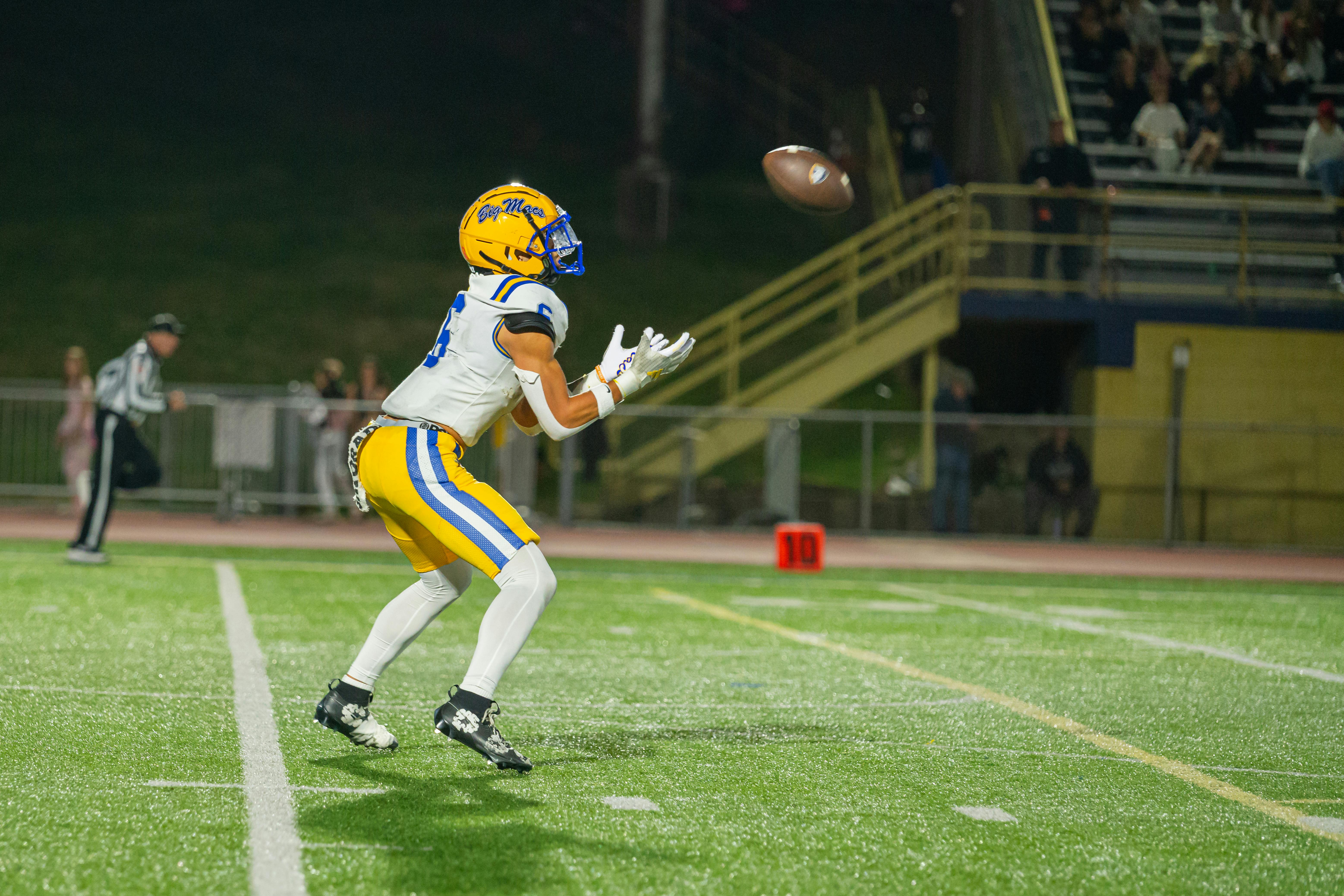
The kickoff was once among the most dangerous plays in football, and rule changes progressively removed it from the game before a redesign attempted to restore it.
The danger came from the running start
Under the traditional alignment, the kicking team ran a long distance before contact while the returning team ran towards them.
Closing speeds were therefore higher than on any other play, and the collisions occurred in open space where neither player could brace.
Injury rates on kickoffs were substantially higher than on plays from scrimmage, which is what prompted intervention rather than any strategic concern.
Each change reduced returns further
Moving the kicking spot forward put more kicks into the end zone, and moving the touchback spot forward made accepting one more attractive.
Restricting the running start reduced the speed at contact, but it also reduced the coverage team's ability to get downfield, which encouraged deliberate touchbacks.
The combined effect was that returns became rare, and a play that once produced dramatic swings largely disappeared from the game.
Removing the play had its own costs
A team trailing late lost a genuine mechanism for recovering possession, which reduced the number of games that remained competitive.
Roster spots devoted to coverage and return specialists became harder to justify, affecting a category of player whose career depended on them.
Spectators also lost one of the few plays that reliably produced long gains from a standing start.
The redesign changed geometry instead of speed
Newer alignments position the coverage team much closer to the returners and prevent most players from moving until the ball is caught or lands.
This removes the long run-up entirely while leaving the return itself intact, so contact happens at speeds closer to those of a normal play.
Touchback placement was adjusted alongside it to make kicking into the end zone less appealing than allowing a return.
Blocking rules were rewritten to match the new spacing, since techniques developed for players arriving at full speed make little sense when the two lines start a few yards apart.
Why the play keeps being adjusted
Every version creates new incentives, and coaching staffs find the optimal response within a season of any change.
If a rule makes returns marginally unattractive, teams will avoid them entirely, and the play disappears again regardless of the intention.
The design problem is therefore continuous: keeping the play safe while ensuring it remains the option teams actually prefer to take.