
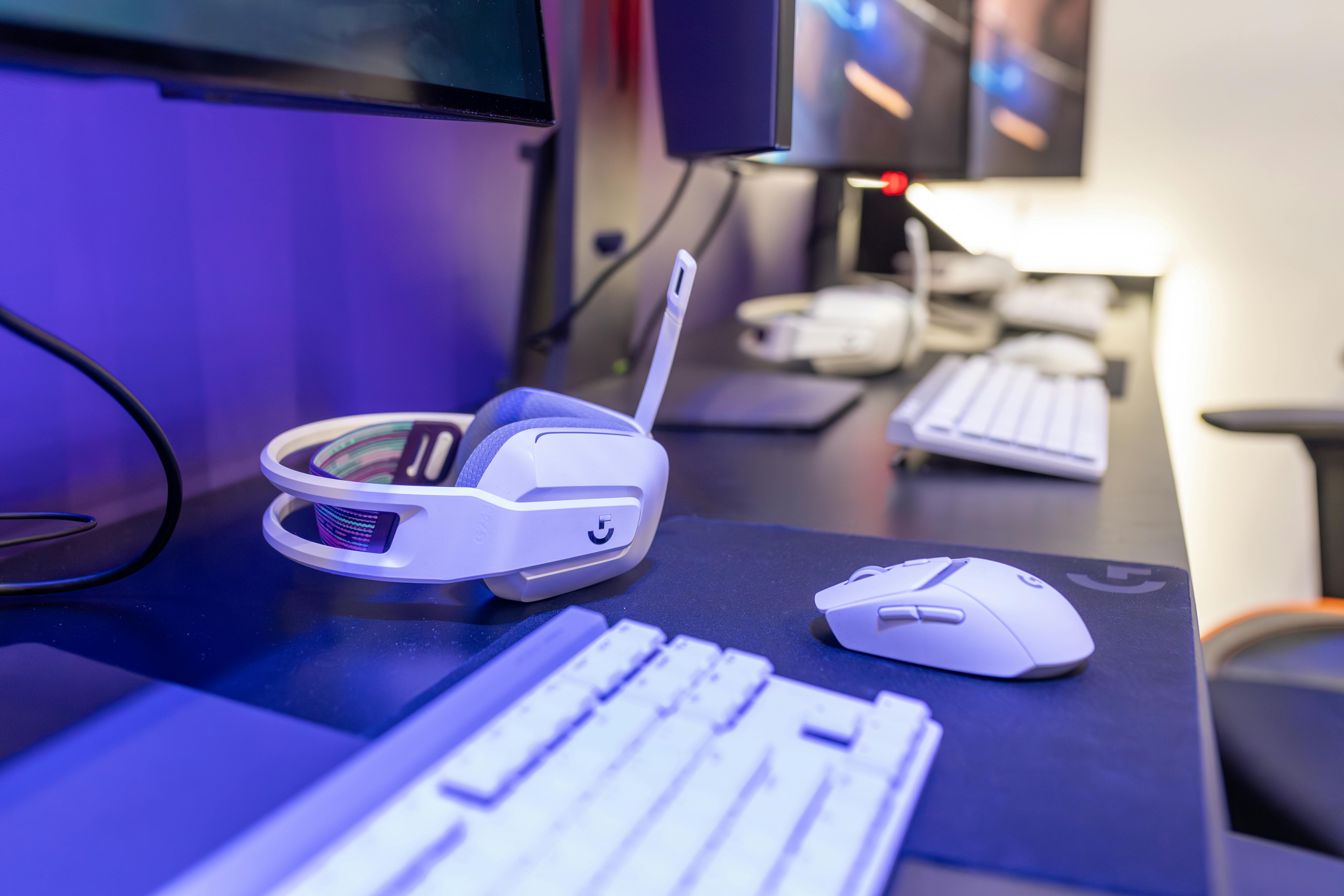
Esports finals are played on local networks in arenas rather than online from home. That decision solves one set of problems and creates several that organizers have to engineer around.
Latency is the reason the event is local
Online play routes every input through distant servers, and small differences in connection quality translate into real competitive advantage in games decided by fractions of a second.
A local network removes that variable. All players connect to the same server in the same building over the same hardware, so no one is disadvantaged by where they live.
This is why the format is called a LAN at all. The term describes the competitive-integrity solution, not the venue, and it remains the standard for anything with a title on the line.
Sound isolation is a competitive requirement
Many competitive titles carry critical information in audio, including footsteps and reload cues. A crowd reacting to a play visible on the big screen can leak information to players below.
Organizers address this with soundproofed booths, noise-canceling headsets and white noise piped into the players' audio. Each layer removes another route by which crowd reaction becomes an unfair signal.
Booth design is a genuine tradeoff. A fully enclosed booth protects integrity but hides the players, and audiences come partly to watch reactions, so glass and camera placement matter.
The broadcast delay does two jobs
Streams run behind live play, which is standard for television, but here the delay also protects competition. Without it, information from the broadcast could reach players or their support staff.
The delay has to be long enough to be safe and short enough that the venue crowd and the online audience are not watching wildly different moments of the same match.
Production teams manage that gap carefully, because a crowd roaring at something the stream has not shown yet is a spoiler that no amount of commentary can repair.
Hardware parity is enforced, not assumed
Players are extremely sensitive to input hardware, and organizers usually allow competitors to bring their own peripherals while supplying identical computers and monitors to everyone.
Machines are imaged from a single configuration so that settings, drivers and game versions match exactly. A driver difference between two stations is a legitimate integrity failure.
Spare stations sit ready behind the stage. A hardware fault mid-series means a pause and a swap, and the tournament rules define precisely how the game state is restored.
Scheduling is the hidden constraint
Series lengths are unpredictable, since a best-of-five can end quickly or run for hours. Arena bookings, staff hours and broadcast windows are not nearly so flexible.
Organizers build buffers between matches and prepare filler segments, which is why esports broadcasts carry so much analyst desk time. The desk absorbs variance that the schedule cannot.
Multi-day events compound the problem, because a delay on the first day pushes into a second day already booked to the hour. Most of the production plan exists to prevent that cascade.