
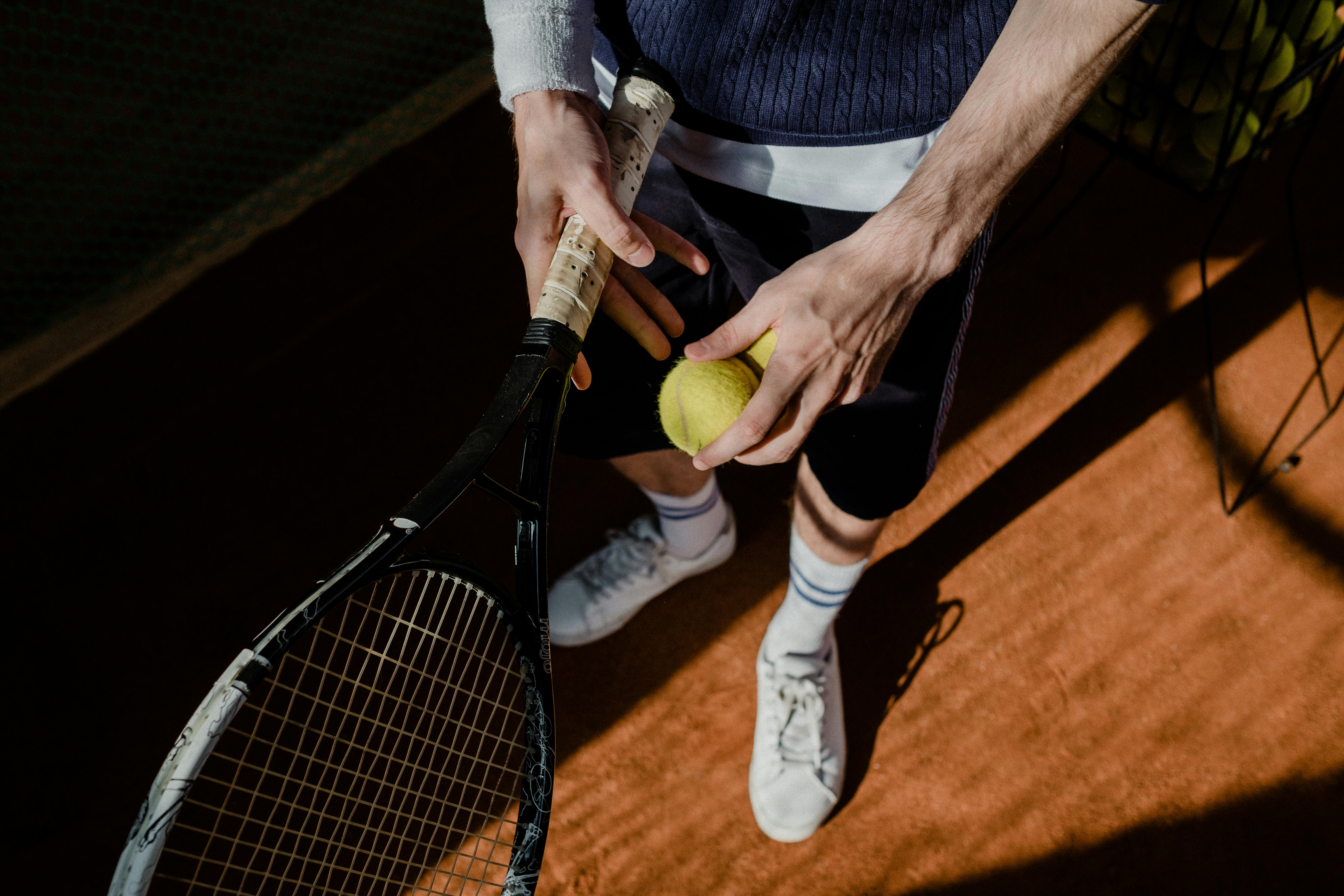
Tennis balls are changed at set intervals during a match, and the change alters conditions noticeably. Players plan around it because the effect is predictable.
Balls degrade in two separate ways
The internal pressure of a ball falls with use, so it bounces lower and travels more slowly through the air.
The felt surface simultaneously loosens and fluffs up, which increases air resistance and slows the ball further while making it easier to grip for spin.
These changes happen quickly on abrasive surfaces and more slowly on smooth ones, which is one reason the same event can feel different from one court to another.
The change interval is counted in games, not time
Balls are replaced after a specified number of games, with the first change occurring earlier because the warm-up consumes some of their life.
Counting games rather than minutes ties the replacement to actual use, since a long game wears a ball more than a quick one.
The consequence is that both players always know exactly how many games remain before the next change.
Servers gain immediately after a change
A new ball is faster and bounces higher, which increases the speed of a first serve and the kick available on a second.
Returners face a shorter reaction window against a ball that has not yet slowed, so breaks of serve become measurably less likely in the games directly after a change.
This is why players receiving in those games often accept a defensive position and target the games later in the cycle instead.
Old balls favour patient play
As the ball slows, rallies extend, and a player who constructs points gains against one who relies on hitting through the court.
Heavy topspin becomes more effective too, because the fluffier surface holds the strings for longer and produces more rotation.
Players with contrasting styles therefore experience the same cycle in opposite directions, and momentum within a set can track the ball age as much as anything else.
Conditions amplify the effect
Altitude and heat make balls fly faster, so a new ball at a high-altitude venue creates a larger jump than the same change at sea level.
Humidity works the other way, adding weight to the felt and shortening the period during which a new ball feels quick.
Tournaments choose ball types partly to manage this, and a change of supplier at an event can shift the balance between attacking and defending players across an entire draw.