
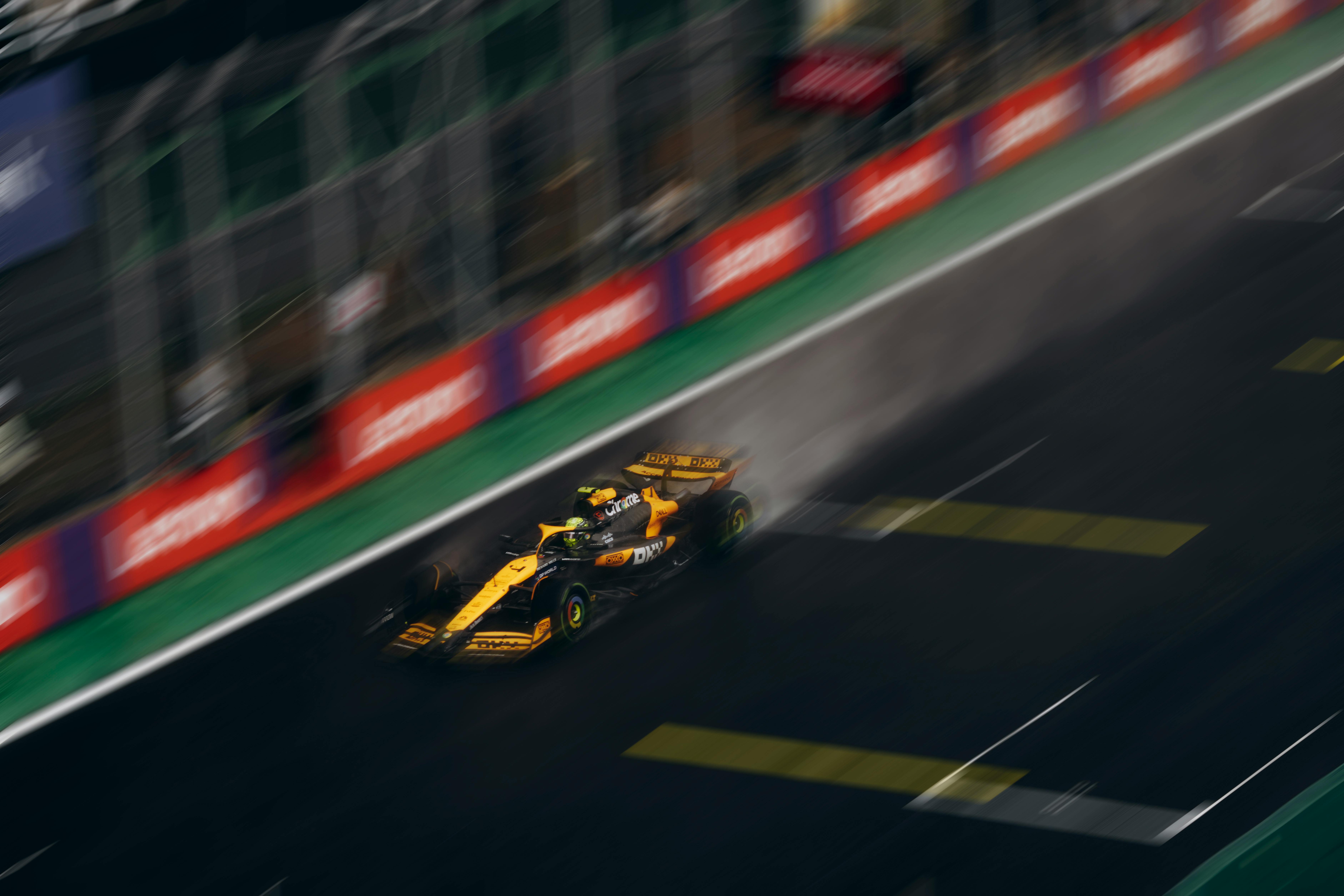
Much of what determines a race result happens on a pit wall, and the tyre decisions are the largest single lever available.
The basic trade
Softer compounds are faster and degrade quicker.
Which means the choice is between lap time now and lap time later, with a pit stop costing a fixed amount of time.
The optimum balances total time across the race rather than maximising any single stint.
Degradation types
Thermal degradation, where the compound overheats and loses grip.
And wear, where material is physically removed.
Which behave differently — thermal degradation can sometimes be managed by driving differently, whereas wear is largely irreversible.
The delta
The time lost entering, stopping and rejoining, measured against staying out.
Which varies by circuit and is the number every strategy calculation starts from.
Circuits with long pit lanes push strategies toward fewer stops for straightforward arithmetic reasons.
Track position
Overtaking difficulty varies enormously by circuit.
Which means at some venues a faster car behind cannot pass, making track position worth more than tyre advantage.
This is why identical degradation data produces different strategies at different circuits.
Undercut and overcut
Stopping earlier to use fresh tyres to gain time on a rival still out.
Or staying out longer, using clear air while the rival is on cold tyres.
Which works depends on how quickly the compound reaches operating temperature and on how much the older tyre is actually losing.
Safety cars
Reduce the cost of a pit stop substantially, since the field is slowed.
Which makes a timely safety car worth an enormous amount and makes strategy partly a matter of luck.
Teams model the probability of one at each circuit and factor it into whether they commit early.
Regulations and constraints
Rules about compound allocation and mandatory use of multiple compounds shape what is available.
Which prevents the simplest strategy of running one compound throughout.
These rules exist specifically to create strategic variation, and they succeed at that.
Why calls look wrong
Teams decide with incomplete information about rivals' plans and about how a tyre will behave in the next ten laps.
Which means an outcome that looks obvious afterwards was a probability judgement at the time.
Tyre warm-up
Compounds have operating temperature windows, and performance outside them is poor.
Which is why the first lap after a stop is slow and why cold conditions change strategy entirely.
Getting a tyre into its window quickly is a genuine driver skill.
Track evolution
Surfaces gain grip as rubber is laid down through a race weekend.
Which means late qualifying runs are generally faster and strategy models must account for a changing baseline.
Rain resets this entirely, washing the accumulated rubber away.
Fuel load
Cars are heavier at the start and lighter as fuel burns off.
Which affects lap time by a measurable amount per lap and interacts with tyre wear.
Comparing stint times without accounting for fuel is misleading.
Driver management
Drivers can extend tyre life by adjusting how they use them, at a cost in lap time.
Which is a continuous negotiation between the driver and the pit wall during a race.
Radio messages about managing pace are this conversation happening in public.
Simulation
Teams run thousands of race simulations before and during events.
Which produces probability distributions rather than single answers.
Weather
Intermediate and wet compounds have narrow operating windows.
Which makes crossover decisions between wet and dry tyres among the highest-stakes calls available.
Getting the timing right by one lap has decided races repeatedly.
Traffic
Rejoining behind slower cars costs time that models must anticipate.
Which is why teams calculate the gap needed for a clean exit before committing to a stop.
A stop into traffic can cost more than the tyre advantage gained.
Team orders
Strategy for two cars involves priorities that are not always equal.
Which produces the situations that generate most controversy.
Teams generally state their policy in advance, and applying it under pressure is another matter.
Following the race
Watch stint lengths and lap time trends rather than track position alone.
Which reveals what each team is attempting before the stops happen.
A car dropping half a second a lap consistently is telling you a stop is coming.
Why it stays interesting
The decisions are made in real time with incomplete information, which is why they are argued about afterwards.
Qualifying trade-offs
Tyres used in qualifying may be required for the race in some regulatory formats.
Which links Saturday decisions to Sunday strategy directly.
Teams sometimes accept a worse grid position to start the race with better rubber available.
Communication
Strategy is relayed by radio under time pressure, frequently in coded shorthand.
Which is why messages sound cryptic to listeners and are entirely clear to the driver.
Teams develop their own terminology for stint plans and target lap times.
Closing
Every race decision is a probability judgement made with partial information about rivals and about the next twenty laps.